
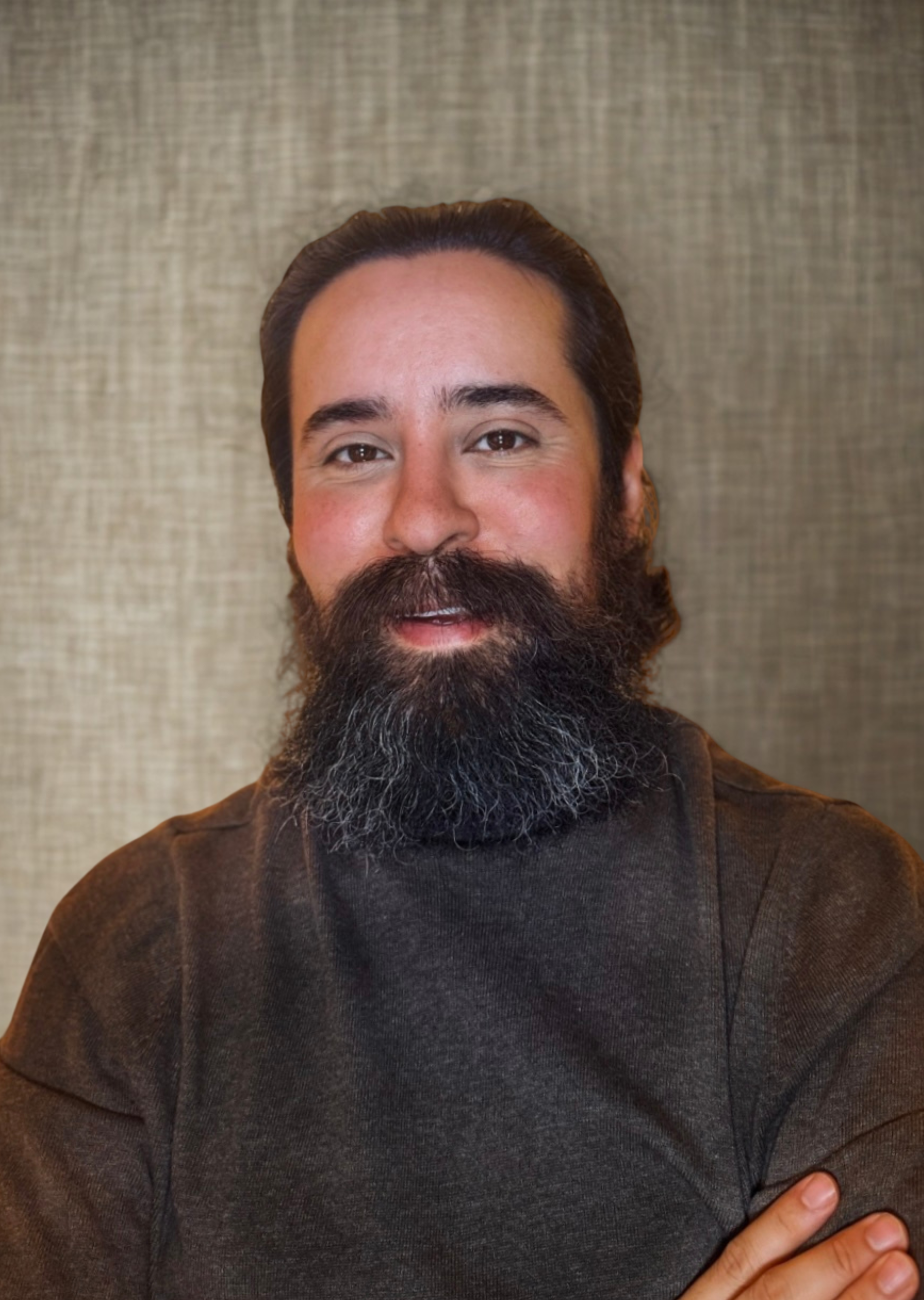
Father, Advocate & Educator.
For me, educational leadership isn't just a career—it's a calling rooted in the quiet, difficult moments of fatherhood.
As a single father to two children with disabilities, I have seen firsthand how the traditional classroom can feel like a battlefield. I watched my daughter struggle to find safety in a system that couldn't accommodate her emotional depth, and I watched my son's brilliance get lost behind a wall of anxiety. Their experiences revealed a hard truth: when a child fails to thrive, it is often because the system lacks the tools to support them—not because the child lacks ability.
This realization moved me to lead. Today, my mission is to create "Safe Havens"—educational cultures that bridge the gap between a student's fear and their potential. I believe that for children to truly flourish, their education must offer both mirrors and windows: mirrors to see their own identities reflected and validated in the curriculum, and windows to envision a world of limitless possibility.
By moving students out of their "frustration zones" and into their "zone of proximal development," we restore dignity to the learning process. True equity isn't about treating everyone the same; it's about building the specific scaffolds—the mirrors of representation and the windows of opportunity—that each learner needs to move from fear to focus.
We need the radical empathy to change the system, so that we never again ask a child to change who they are simply to fit in.
Let's transform education together. I'm looking for fellow advocates, parents, and leaders ready to build schools where every child is seen, heard, and empowered to thrive.
In Solidarity,
Hezekiah
Featured inCOSMOPOLITAN
Huffington Post
U.S. World News
Forbes
Recognized regionally, statewide, and nationally.
-
In 2023, Dr. Herrera was one of eleven special education teachers to receive the National Association of Special Education Teachers’ Outstanding Special Education Teacher Award. This national recognition award is bestowed on special education teachers who have demonstrated outstanding achievement as teachers in the field. Nominations are made by teachers’ respective school or district administrators, colleagues, and parents. Candidates are judged based on teaching criteria, service outside the classroom, and professional activities.
-
In 2026, the California Teachers Association awarded Dr. Herrera for his exceptional dedication to social justice, equity, and human rights. He received this honor in the area of Students with Exceptional Needs.
-
This prestigious regional award is presented to individuals nominated by school district representatives and selected by a review committee from the Special Education Local Plan Area (SELPA). It honors those who have made outstanding contributions to students with disabilities. In 2023, Dr. Herrera received this distinction from the San Diego East County SELPA.

My Approach
As educators, we must blend adaptive instruction with holistic growth — building custom tools and making real-time adjustments to fit each student's unique learning profile. Rather than judging behavior, we should treat it as data: valuable information that guides better communication and turns IEPs from static legal documents into dynamic, actionable plans. Through radical collaboration and data-driven decisions, we can continuously refine our strategies so that families and educators stay united in helping every student succeed.
It comes down to four beats we return to again and again:
Adapt
Confidence fuels capability. We focus on what a student can do, stacking small wins until "I can't" becomes "I did." Real learning happens when a child feels capable of success.
Trust
We move forward as a team. Education isn't a solo mission — we partner closely with families so everyone is pulling in the same direction. When we trust one another, the student wins.
Belong
Everyone has a seat at the table. We don't just accommodate differences; we celebrate them. In our learning spaces, safety and respect aren't the goal — they're the baseline.
Empower
The system changes, not the person. Standardized plans don't work for non-standard minds, so we build custom tools and adapt the curriculum to fit each student's strengths. If the tool doesn't fit, we build a new one.